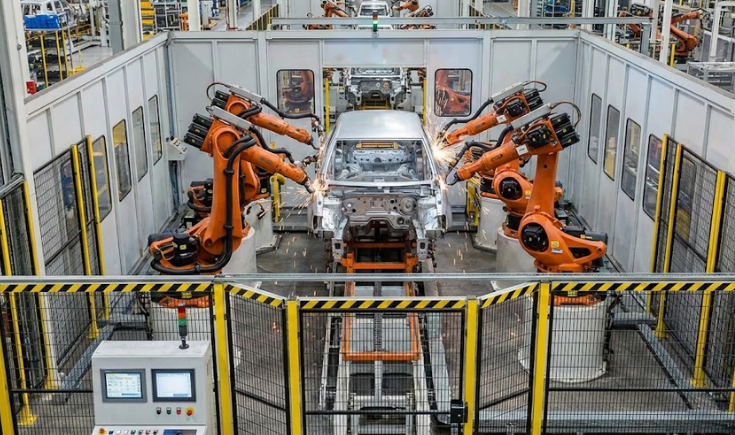
A robotic cell is an automated system that includes industrial robots, tooling, sensors, controllers, and safety fencing to perform specific automotive manufacturing tasks with high speed and precision.
Robotic Cells in Automotive Manufacturing: Applications and Benefits
- Swiza Safetech
- January 05, 2026
- Views Count
The automotive industry is a global leader in industrial automation, with robotic cells playing a vital role in modern vehicle production. As manufacturers strive for higher efficiency, consistent quality, and improved safety, robotic cells have become essential across almost every stage of automotive manufacturing.
A robotic cell is an integrated automation system that includes industrial robots, end-of-arm tooling, sensors, vision systems, controllers, and safety equipment. These systems are designed to perform specific manufacturing tasks with high speed, accuracy, and repeatability.
Applications of Robotic Cells in Automotive Manufacturing
Robotic Welding Cells
Robotic welding cells are widely used in body-in-white (BIW) production for spot welding, arc welding, and laser welding. These cells ensure strong, uniform welds while reducing defects and improving cycle times. Welding robots also enhance worker safety by automating hazardous operations.
Robotic Assembly Cells
Robotic assembly cells automate repetitive and precision-critical tasks such as fastening, press-fitting, and sub-assembly. They are commonly used in engine assembly, transmission systems, and interior components, helping maintain consistent quality while increasing production efficiency.
Machine Tending Robotic Cells
Machine tending robotic cells automate the loading and unloading of CNC machines, presses, and molding equipment used to manufacture automotive components. By reducing manual handling, these cells increase machine uptime and support continuous, unattended production.
Robotic Painting and Coating Cells
Robotic painting cells are used for vehicle body painting and protective coatings. They provide uniform paint application, reduce material waste, and ensure a high-quality finish while keeping workers away from harmful fumes and chemicals.
Robotic Inspection and Material Handling Cells
Robotic inspection cells use vision systems and sensors to detect defects, check dimensions, and verify weld quality. Material handling cells manage part transfer, pick-and-place operations, and line feeding, ensuring smooth and efficient workflow across production lines.
Benefits of Robotic Cells in Automotive Manufacturing
Robotic cells significantly increase productivity by operating continuously with high speed and precision. They improve product quality and consistency by minimizing human error and process variation. By automating dangerous and physically demanding tasks, robotic cells also enhance workplace safety.
In addition, robotic cells help reduce manufacturing costs through lower labor dependency, reduced scrap rates, and improved operational efficiency. Their flexibility allows automotive manufacturers to adapt quickly to new vehicle models, production volumes, and customization demands.
Conclusion
Robotic cells are a cornerstone of modern automotive manufacturing, supporting critical processes such as welding, assembly, painting, inspection, and material handling. As the industry moves toward smart factories and Industry 4.0, robotic cells will continue to drive efficiency, quality, and innovation.
By investing in robotic cell automation, automotive manufacturers can remain competitive, scalable, and future-ready in an increasingly automated production environment.
FAQs
-
What is a robotic cell in automotive manufacturing?
-
Why choose Swiza as an industrial safety fencing manufacturer in India?Swiza is a leading Indian manufacturer of industrial safety fencing, offering durable, compliant, and custom-designed solutions that enhance safety in automated automotive manufacturing environments.Can a robotic safety fence be customized for my facility?Yes, robotic safety fences can be customized to fit specific facility requirements. This includes adjustments in height, length, and the integration of additional safety features such as sensors and interlocks.